Elusive Footwork Confounding Both Bulls and Bears
2007/9/21 16:07:38
I see that more people seem to prefer red text, so this ID will make a slight adjustment—no bold, and increase the font size. This might be more comfortable for readers who find it glaring. Additionally, key points will be bolded for clarity.
In ordinary people's eyes, market makers killing off players seems like what clueless stock commentators call the "bulls vs. bears" battle. But let me tell you clearly: a truly formidable market maker kills both bulls and bears alike, slapping everyone from both sides. If you don't understand this principle, you might as well have been trading stocks for nothing.
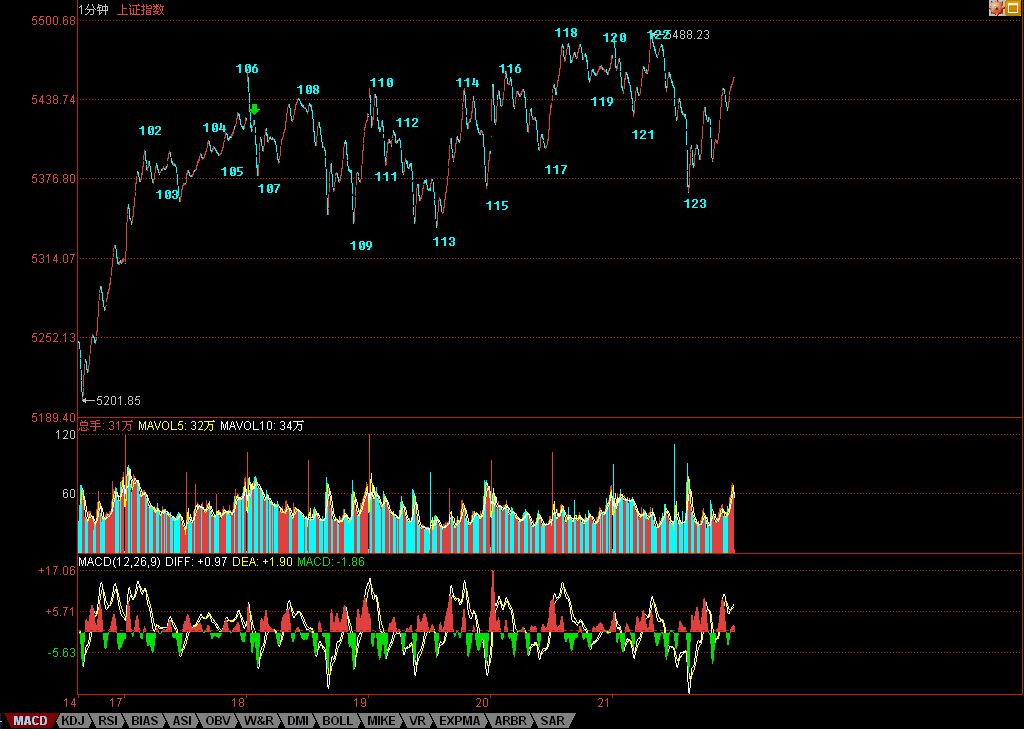
Others' elusive footwork becomes the perfect stage for this ID's theory of "Ripple Steps." Today's chart pattern is textbook-classic. If you can't understand it, you really need to go back and study.
But it must be made clear: the current situation is extremely severe. For those who lack technical skill yet are obsessed with short-term trading, this is classic meat-grinder market action.
Remember this one line from this ID: In China, the ultimate victor is always policy. Because we have technical skill, we can dance the Ripple Steps on the blade's edge—but the blade is still a blade. Policy signals are already coming thick and fast. If such aggressive and dense new stock issuances can't calm capital's urge to charge forward, then even harsher policies will certainly follow.
Now some say public mutual funds are so bullish they have the greatest impulse to go long, and no one can control them. How naively typical. One "fund black curtain" exposé can bring them to their knees—are their bosses not subject to Party discipline and national law? Can't investigation teams be sent down to investigate? Those so-called public funds now going crazy for performance and their own personal rat-trading positions—you aren't even Sun Wukong, yet you think you can escape the Buddha's palm? Laughable!
So the blade is the blade. Although we fear nothing in this game, you must keep one string taut at all times—pay 1000% close attention to policy developments. For ordinary investors, you must properly control your position sizing. If you don't have the technical skill, just watch your moving averages.
Next week, the key is whether this week's high can be broken. If not, the market will form a small head-and-shoulders top, and subsequent oscillations will be massive. Moreover, around the Mid-Autumn Festival, sentiment is restless and volatility is inevitable. The current issue isn't about being bullish or bearish—it's about not getting slapped from both sides. Remember: if you can't kill both bulls and bears, you don't deserve to be called a market maker.
Regarding individual stocks, this ID mentioned those dozen or so stocks. For retail investors, if you used them as a stock pool for continuous rotation trading, think about what your returns would be? Don't you remember this ID's concept of capital constantly flowing among them? Look at those dozen stocks—they rise and fall in waves, not a single day idle. Using this ID's theory, is it really that hard to find sell points and buy points among a dozen stocks? Don't come asking whether you can get into 000099 only now that it's risen these past few days—is that what you call rhythm?
Also, don't have feelings for stocks. This ID has said repeatedly: maximum efficiency for retail investors means constant rotation. Sell at the sell point, then absolutely wait for the buy point. While waiting, go find other stocks at buy points. If you have time, compare this ID's dozen stocks, feel that alternating rhythm of rises and falls—it'll probably improve your trading level considerably.
In this public forum, this ID's statements must comply with legal requirements. But this ID has already told you the rhythm as clearly as possible. A few days ago, at the very top, didn't this ID tell you how the Little Eunuch's script would unfold? As for other stocks—if they've formed a top fractal and broken below the 5-day line, then until a bottom fractal appears, why bother with them? Some people keep asking: how about 636? A stock that hasn't even held above its half-year line—is that for retail investors to buy? Big money can fight it out in there, but do retail investors need to waste time tagging along? Wait until the fight's over, the chart cleans up, it'll naturally move. So just keep an eye on it but go operate other stocks first—isn't that more time-efficient?
Sometimes this ID gets anxious on your behalf. Why is this rhythm so hard to grasp? It should be very simple.
Forget it—talking stocks on the weekend is boring.
Heading off now. Goodbye.