Weekend Concert 3: Brahms's Best Symphony -- A Salute to Classicism!
2006/8/4 18:06:37
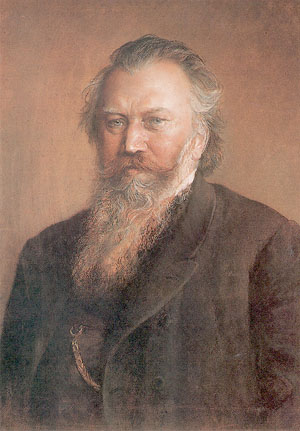
After Schubert, Classicism was basically finished. Of course, Brahms still harbored anachronistic yearnings for Classicism, but that was nothing more than a dream. The Fourth Symphony, Brahms's best symphony, is a deep salute to Classicism! In his First Symphony, Brahms even used a melody similar to the "Ode to Joy" in the fourth movement to express his tribute to Classicism, but there, Brahms himself felt constrained. His First Symphony is an excellent work but cannot be called great. The subsequent Second and Third, without such grand ambitions, were paradoxically greater. Of course, the most formidable is still his Fourth Symphony. Here there's a return to the tribute of the First, yet this time he is so free -- as if standing under the dome of the Classical temple, reflecting his own light, the two lights interplaying, merging man and divine.
This concert's main course is the second half: Brahms's Fourth Symphony. But the first half is no less powerful. The first piece is Beethoven's finest overture, the "Egmont" Overture -- possessing the most Classical form and the most fiery passion, with a sense of balance reaching the highest level. This is also the most perfect overture in history in terms of the unity of form and content. The only work that can compare is probably Beethoven's own "Leonore" Overture No. 3, but this one feels purer -- the material is leaner, pushing the simplest material to its extreme.
The second piece is Schubert's Fantasy in F Major for piano four hands -- one of the greatest works in all four-hand repertoire. The only thing more powerful is probably Schubert's own Grand Duo, which is essentially a symphony, so let's not compare. This has more Romantic feeling, and the form isn't particularly Classical either, but its inner spirit remains Classical. The purity within is as untouchable as heavenly music. For such a work, nobody has ever been able to write anything comparable since.
The third piece is again by Beethoven -- the "Spring" Sonata, a relatively popular work. The reason it feels slightly lighter than the similarly structured "Kreutzer" is simply that the work's basic mood is more relaxed -- it's one of Beethoven's warmest works. Actually, relaxed and warm works are very difficult to write, mainly because they easily become vulgar and slippery. But here, absolutely not -- within it is the most pure Classical balance.
Using Beethoven and Schubert to set off Brahms -- this fellow has quite some honor. But this is what he deserves. Beethoven and Schubert were the people Brahms most respected, and he also worked tirelessly to collect and organize Schubert's music. Also, if you enjoy listening, please go leave comments on this ID's music podcast. More comments mean more upload space, so that the house full of music will have room to be brought online. It's up to you all!
Please turn off all other background music first.